14 min read
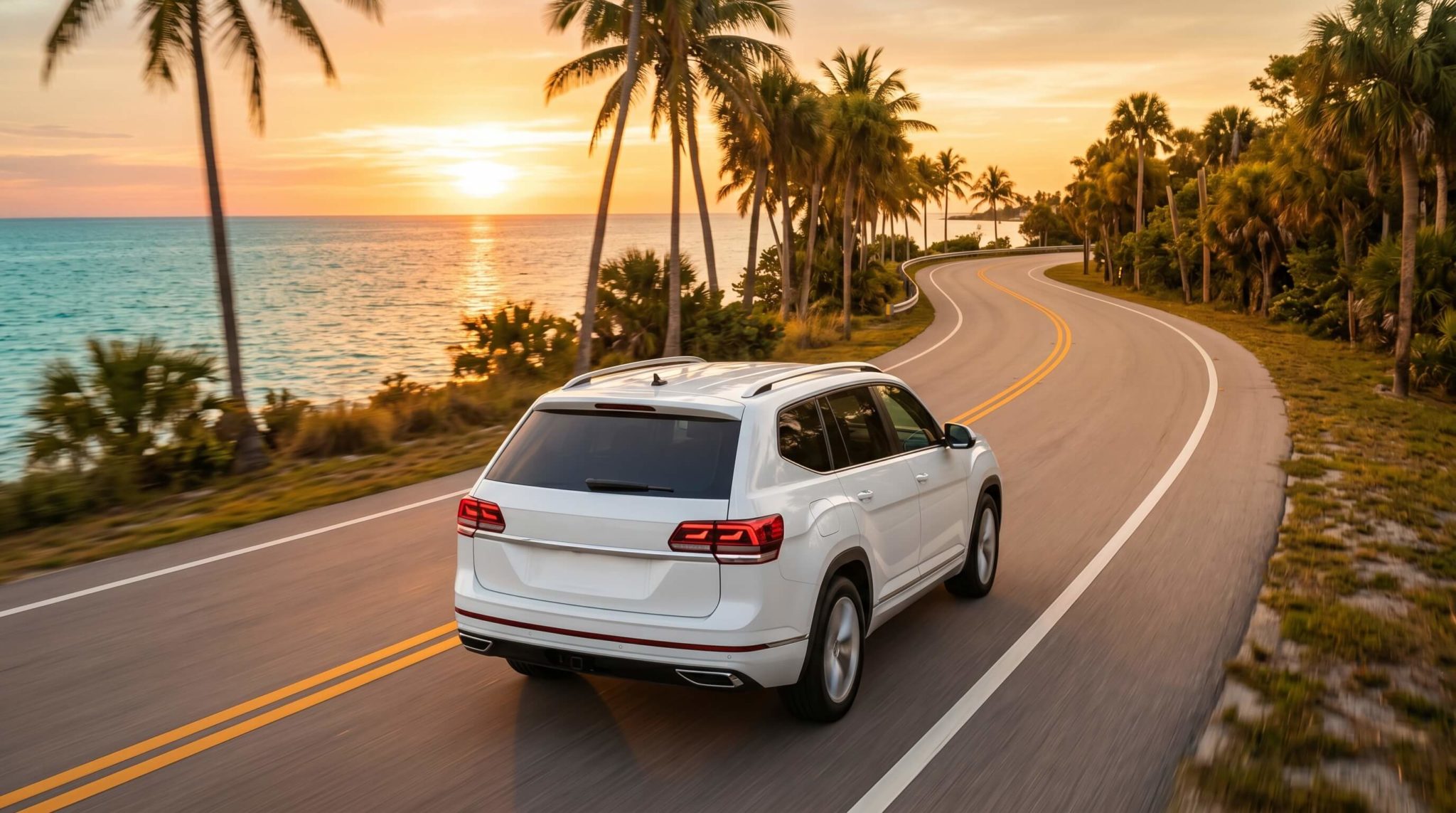
Three SUVs do the Emerald Coast life better than the rest. The Toyota RAV4. The Honda CR-V. The Subaru Forester. Paved Beal Pkwy commute on Monday. Sandy boat-ramp launch on Saturday. Birmingham-bound hurricane evacuation when the next Ian comes. Same vehicle, all three.
Need three rows? Toyota Highlander. Under $20,000? Hyundai Tucson, Nissan Rogue, or Chevy Equinox. This guide walks through each pick by use case — family, beach life, budget — plus a Florida-specific checklist for any used SUV bought in the panhandle.
In This Guide
What Makes an SUV a Good Fit for Emerald Coast Life
Four conditions that Denver and Phoenix vehicles never see
The Emerald Coast is harder on used vehicles than most of the country. A used SUV bought in Fort Walton Beach has to handle four conditions Denver and Phoenix vehicles never see.
Salt-air corrosion. Beal Pkwy sits roughly 4–5 miles from the Gulf. Vehicles that lived their lives in Pensacola, Mobile, or Destin spent years with salt-laden air on every steel and aluminum surface. Undercarriage. Exhaust. Brake lines. A/C condenser. Electrical connectors.
The strongest candidates have galvanized body panels, well-sealed undercarriage components, and aluminum or composite parts where corrosion would otherwise eat through. Toyota and Honda earn their Florida reputation on this dimension specifically.
Hurricane-evacuation cargo. Every Emerald Coast family eventually evacuates inland. Birmingham. Atlanta. Nashville. A 4-day evacuation means cargo for 2–4 humans plus pets, important documents, two coolers, valuables you can’t insure, and the kids’ essentials. That’s 60–80 cubic feet of stuff, sometimes with a kayak or paddleboard tied to the roof.
Two-row crossovers in the 70-cubic-foot rear-seat-folded range handle this. Smaller SUVs (Toyota C-HR, Honda HR-V) struggle.
Sand and saltwater intrusion. Crab Island, Henderson Beach, and the bayou access points all involve carpet that gets sand-and-salt soaked. SUVs with rubberized cargo floors (RAV4 Adventure / TRD Off-Road, Forester Wilderness, 4Runner) are easier to clean than carpeted versions.
Hurricane-season A/C demand. Florida summers run 90°+ for 4–5 months. Emerald Coast humidity adds another 10° of perceived heat. SUVs with dual-zone or tri-zone climate control age better than single-zone systems because the rear-zone evaporator runs less under low load. Check the A/C pressure on any used SUV more than 5 years old before signing anything.
A “good Florida SUV” optimizes for these four conditions plus the standard family-vehicle requirements. The picks below all do.
Best Used SUVs for Families
Safest, most reliable, and most resale-stable picks for the Emerald Coast
The three crossovers below are the safest, most reliable, and most resale-stable picks for the Emerald Coast climate. Each has earned IIHS Top Safety Pick (or Top Safety Pick+, depending on year and trim) in multiple recent model years per IIHS official records. Each holds value better than its competitors through Florida’s coastal conditions.
Family-tier picks cost more upfront. They lose less on resale. The 5-year ownership math usually favors them.
Toyota RAV4 (2019–2024)
The most-cross-shopped used SUV in America, for a reason.
The current generation (2019+) earned IIHS Top Safety Pick in 2019–20, 2021, and 2022. Each requires specific headlights — typically the LED projectors on XLE, XSE, Limited, and Adventure trims rather than the LE’s reflectors. The 2023–24 RAV4 also earned Top Safety Pick under the tougher 2023 criteria. Note: per IIHS official records, the recent RAV4 generation has earned Top Safety Pick — not Top Safety Pick+.
The Hybrid is rated 40 MPG combined per EPA (41 city / 38 highway) on standard trims. Meaningful in a region where weekly gas spend matters.
Florida-specific: The optional AWD system is rear-mechanical (rather than electric-rear-wheel like some competitors). Small advantage on wet beach launches, irrelevant on dry pavement. Adventure and TRD Off-Road trims add a more aggressive front end and rubber cargo floor.
What to verify on any used RAV4. Undercarriage for salt corrosion (strongest at the rear cross-member). A/C blows cold within 30 seconds of startup. Pull the cargo cover and inspect the rear cargo well for past flood-water lines.
Honda CR-V (2017–2024)
The most direct cross-shop with the RAV4.
Known issue: The 2017–2022 generation has known oil-dilution issues on the 1.5L turbo gas engine. Fuel mixes with engine oil, especially with short-trip driving — relevant in a beach town where short trips dominate. Honda issued a software fix and warranty extension for 2017–2018 CR-V and 2016–2018 Civic models. A pending class-action also alleges the issue persists in 2019–2023 models. Verify oil level and condition on any used CR-V with this engine.
The CR-V has earned IIHS Top Safety Pick ratings across most recent model years. Cargo capacity is 75.8 cu ft seats folded on 2017–2022 gas trims (68.7 cu ft on hybrid). Handles full hurricane-evacuation loads.
Honda’s 5-year/unlimited-mile corrosion limited warranty covers perforation of original body panels. Note: corrosion warranty transferability to subsequent owners varies. Verify with the dealer for any specific used vehicle.
What to verify on any used CR-V. Oil level on the 2017–2022 1.5L turbo. A/C compressor cycles smoothly. Rear suspension bushings — Florida potholes punish them.
Subaru Forester (2019–2024)
The SUV most disproportionately bought by families with active outdoor weekends. Kayaks. Paddleboards. Mountain bikes. Dogs.
Subaru’s full-time Symmetrical All-Wheel Drive (their term) is a meaningful difference on wet sand and the gravel of the Choctawhatchee River trails. For paved Emerald Coast driving alone, the AWD advantage is smaller than the marketing implies.
Per IIHS, the 2019 generation earned Top Safety Pick+ in 2020 and 2022, and Top Safety Pick in 2021. Varies year by year as IIHS criteria evolve and headlight ratings change.
Florida-specific: Foresters from northern climates often have minor rust on rear strut towers — less common in southeastern-coast life. The Wilderness trim (2022+) adds raised suspension, all-terrain tires, and rubberized floor — actually pays off for beach-access driving.
What to verify on any used Forester. Timing belt or chain (depending on year) at 90,000+ miles. A/C condenser hasn’t been damaged by road debris (front-mounted, exposed). Headlight clarity — older Foresters yellow at the polycarbonate lens. Easily restored, but factor it in.
Best Used SUVs for Beach Life
Crab Island, Destin Harbor, the bayou — real off-pavement capability
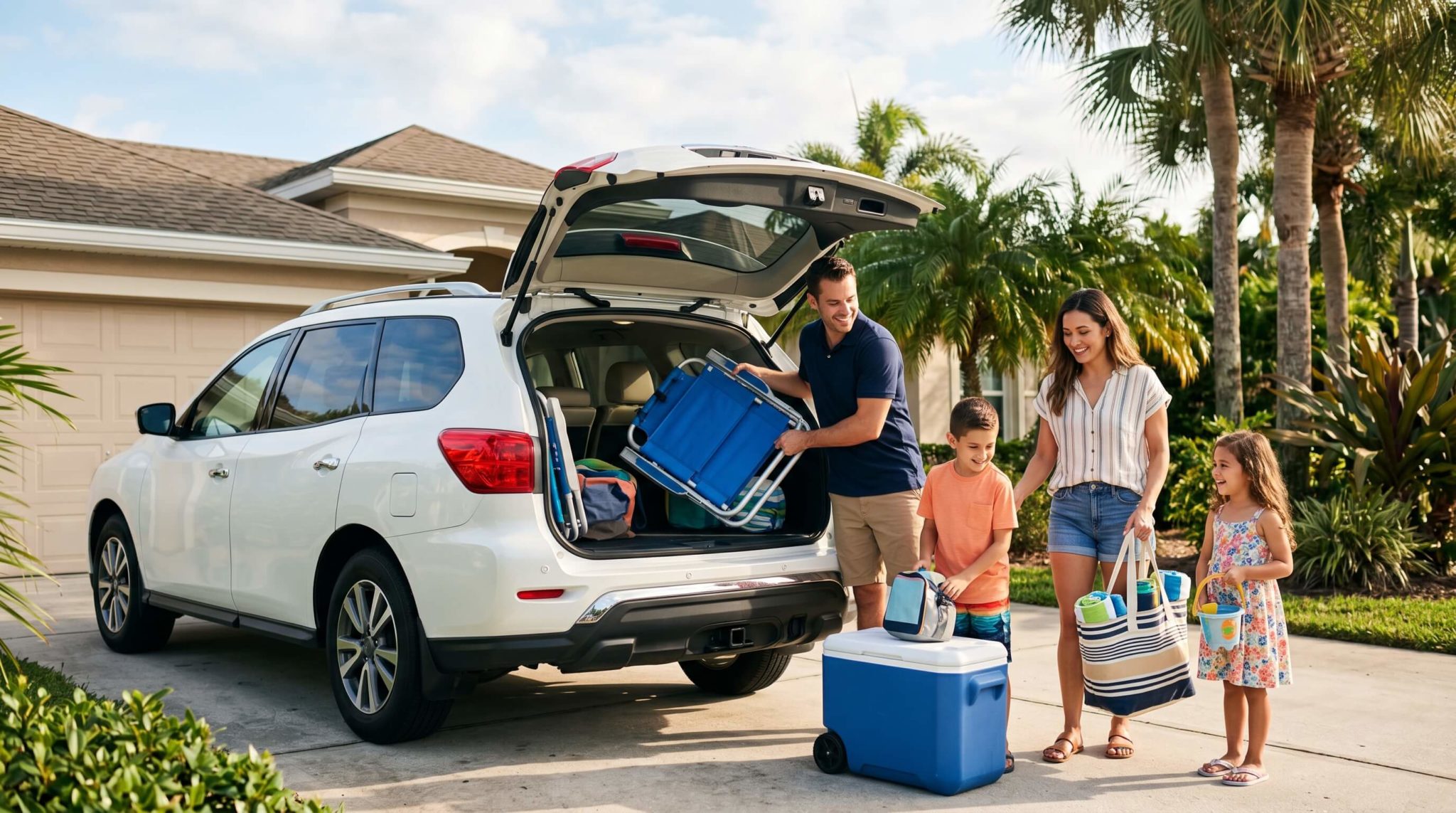
For families that want their SUV to handle gravel boat ramps, soft sand, occasional saltwater splash, and weekend trips to Henderson Beach or Choctawhatchee Bay. The picks below add real off-pavement capability without giving up daily-driver comfort.
Toyota 4Runner (2014–2024)
The SUV every long-tenured Florida outdoor family eventually owns.
The current generation (2010–2024) is on a body-on-frame truck platform. High ground clearance. Real low-range four-wheel drive on TRD Off-Road and TRD Pro trims. The kind of long-term durability that makes a 2014 4Runner with 150,000 miles still command meaningful resale.
What you trade. Fuel economy (16 city / 19 highway / 17 combined MPG per EPA on the 2020+ V6, real-world closer to 17). Interior tech (the dashboard predates the iPhone in some respects). Ride quality on potholed Florida roads (the truck-frame setup is firmer than any unibody crossover).
The TRD Off-Road and TRD Pro trims add real off-road suspension and Crawl Control. They matter if you actually launch a boat or drive the dunes. The standard SR5 adds nothing meaningful for off-pavement capability beyond the standard AWD.
Jeep Wrangler (2018–2024) and Wrangler 4xe
The most committed off-road platform in this guide.
The JL generation (2018+) added meaningful improvements to on-pavement comfort while keeping the solid-axle, removable-doors, fold-down-windshield character. The 4xe plug-in hybrid (2021+) is rated 21 miles of EV-only range per EPA. Enough to cover most Crab Island runs on electric alone.
What you trade. Cargo space behind the second row is small (32 cu ft on 4-door Unlimited, less on 2-door). Fuel economy is mediocre (17–22 MPG on gas). On-pavement ride is firm enough that the Wrangler is a poor choice as a family-of-five-and-pet daily commuter.
For a buyer who actually launches a boat and drives sand — or wants the most capable off-road platform with mainstream parts availability — the Wrangler is the answer. For a buyer who just likes the look, there are easier daily drivers.
Ford Bronco Sport (2021–2024)
A meaningful step down from the full-size Bronco in capability. A step up from a Forester or RAV4 in genuine off-pavement readiness.
The Badlands trim (2021+) adds Trail Control, a locking rear differential, and a real low-range crawl ratio. For a family that wants a daily driver capable of light dunes, gravel ramps, and sandy access roads — without the firm ride of a Wrangler — the Bronco Sport occupies a unique slot.
First-year note: Ford’s first model year (2021) had teething issues. Most resolved by 2022. If buying a 2021, check for any outstanding TSBs (technical service bulletins).
Best Used SUVs Under $20,000
Reliable picks with plentiful used-market inventory
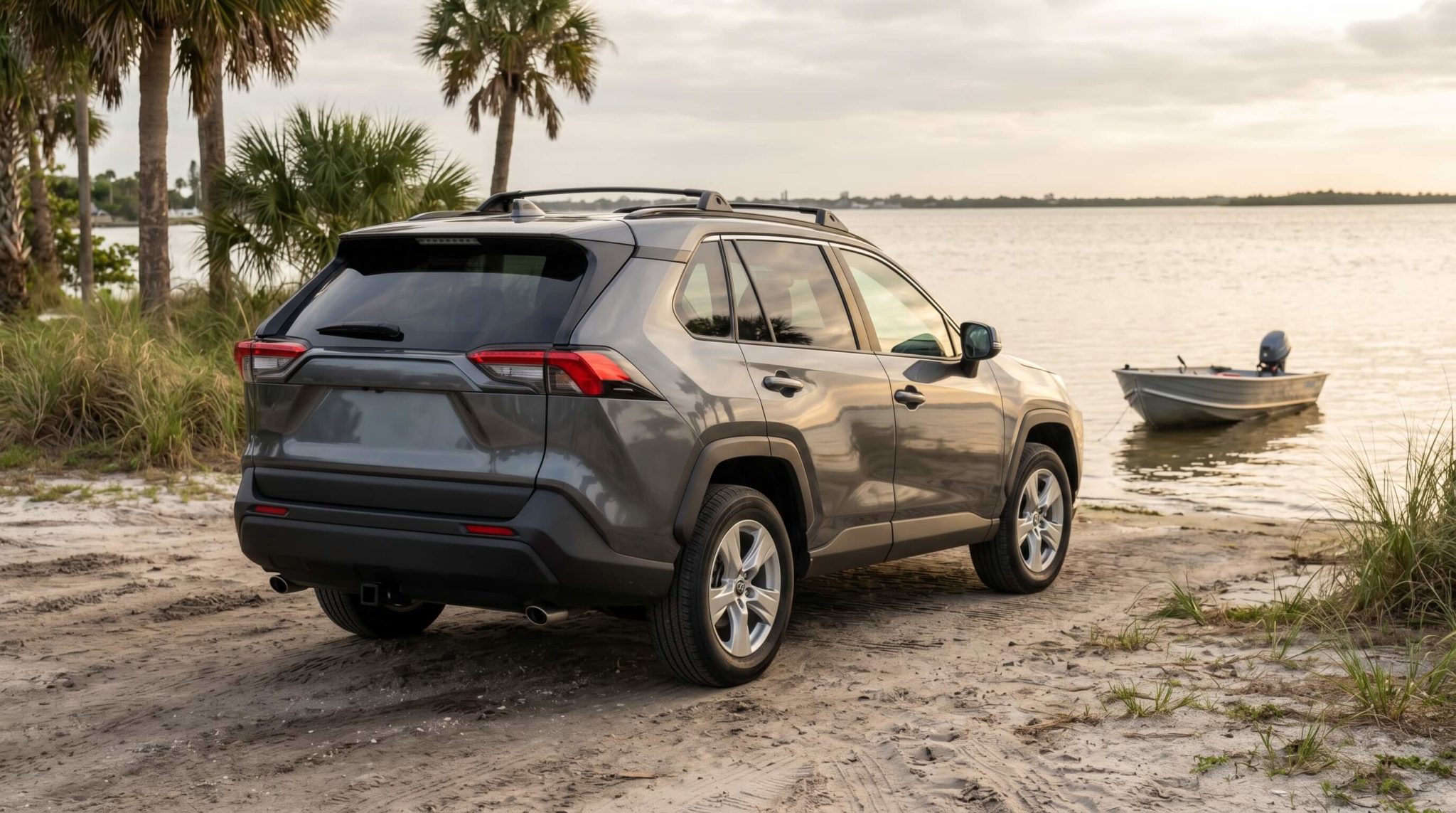
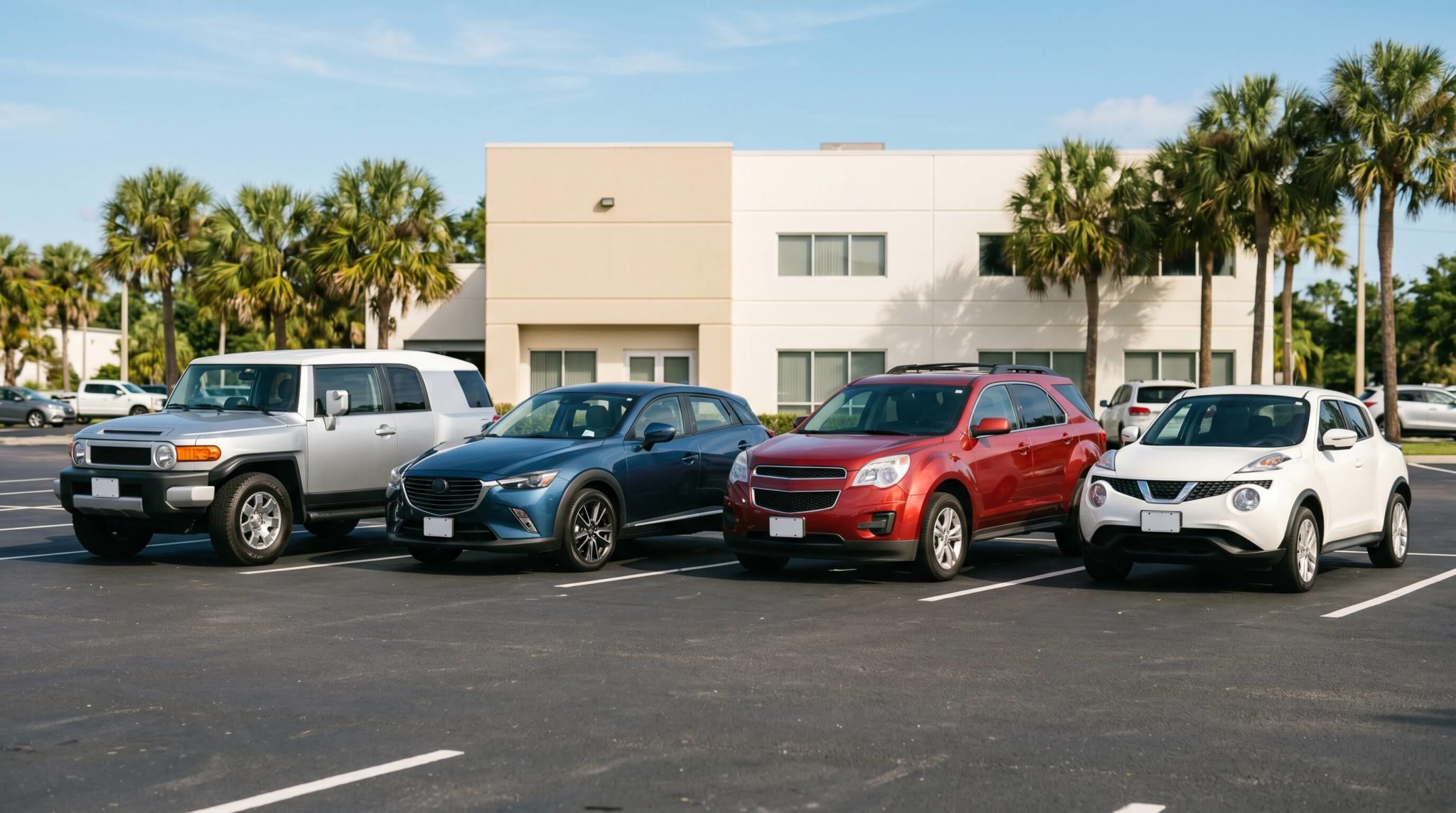
A working family on the Emerald Coast doesn’t always have $25,000+ in budget for a used SUV. The three picks below are reliable enough, with plentiful used-market inventory. They’re not the resale-curve winners the picks above are.
Hyundai Tucson (2018–2021)
Genuine value at the lower end of the segment. The 2018–2021 is the previous generation. The 2022+ redesign is more expensive on the used market.
Reliability data per Consumer Reports puts the Tucson in the middle of the segment. Not Toyota / Honda territory. Not bottom-of-segment either.
What you get. A 5-year/60,000-mile bumper-to-bumper warranty (transferable to subsequent owners) and a 10-year/100,000-mile powertrain warranty (original owner only — for second owners, the powertrain coverage drops to 5 years/60,000 miles from the original purchase date). Verify with the dealer whether the bumper-to-bumper coverage still applies based on the in-service date.
What you trade. Resale value drops faster than Toyota / Honda equivalents. The upside of the buy is the downside of the sell. The 2018–2019 1.6T 4-cylinder has reported issues that the naturally-aspirated 2.0L doesn’t.
Nissan Rogue (2017–2020)
More about volume than excitement. The 2017–2020 generation is reliable enough and comfortable enough. It was one of the best-selling compact crossovers in America in 2017–2018 (Nissan reported over 400,000 units each year). Used market has plentiful inventory.
The CVT transmission is the durability question. 2017–2018 model years are stronger than the early 2014–2016 examples. The 2017+ revisions resolved most of the early-CVT concerns.
What you get. Spacious cabin. Comfortable ride. NissanConnect infotainment. IIHS Top Safety Pick on multiple model years.
What you trade. The CVT has a different driving feel than a conventional automatic — some buyers don’t like it. Resale value is mid-segment.
Chevrolet Equinox (2018–2021)
Chevy’s answer to RAV4 / CR-V. The 2018+ generation is a meaningful step up from the previous generation. The 1.5T 4-cylinder is the standard engine, adequate for normal driving. The 2.0T top trim adds real performance.
What you get. GM’s North American manufacturing-and-service network (every GMC, Chevy, and Buick dealer can service it). Generous cabin space for the segment. Good IIHS ratings on most recent model years.
What you trade. Interior materials are a step down from RAV4 / CR-V. Resale is segment-middle.
Safety Ratings Table by Model Year
Always verify current ratings at iihs.org and nhtsa.gov for the specific year and trim
| Model | Years | IIHS Designation | NHTSA Overall | Notes |
|---|---|---|---|---|
| Toyota RAV4 | 2019–2024 | Top Safety Pick (with specific headlights) on multiple years | 5-star on multiple years | TSP, not TSP+. LED projectors on XLE/XSE/Limited/Adventure required |
| Honda CR-V | 2017–2024 | Top Safety Pick on most years | 5-star on most years | Confirm headlight rating — varies by trim/year |
| Subaru Forester | 2019–2024 | TSP+ in 2020 & 2022; TSP in 2021 | 5-star on most years | EyeSight standard from 2019+ |
| Toyota Highlander | 2020–2024 | Top Safety Pick (with specific headlights) on multiple years | 5-star on most years | Three-row option for families of 5+ |
| Toyota 4Runner | 2014–2024 | Not consistently rated TSP (older platform) | Mixed | Body-on-frame predates current IIHS small-overlap standards on some years |
| Jeep Wrangler | 2018–2024 | Not rated TSP (open-air platform) | Limited testing | Buyers prioritize off-road capability over IIHS scoring |
| Ford Bronco Sport | 2021–2024 | Top Safety Pick on multiple years | 5-star on most years | Newer entry, fewer model years available |
| Hyundai Tucson | 2018–2021 | Top Safety Pick on multiple years (trim/lights vary) | 5-star on most years | Headlight rating improved on later years |
| Nissan Rogue | 2017–2020 | Top Safety Pick on multiple years | 5-star on most years | Verify automatic emergency braking is equipped |
| Chevy Equinox | 2018–2021 | Top Safety Pick on most years (trim-dependent) | 5-star on most years | LT and top trims carry better headlight rating |
Ratings cited reflect IIHS and NHTSA records as of publication. Always verify at iihs.org/ratings and nhtsa.gov/ratings for the specific model year and trim you’re considering.
What to Check on Any Used SUV in Florida
Run this checklist at our lot or anywhere else before signing
Before signing on any used SUV in this trade area — at our lot or anywhere else — run through this Florida-specific checklist.
Salt-air corrosion inspection
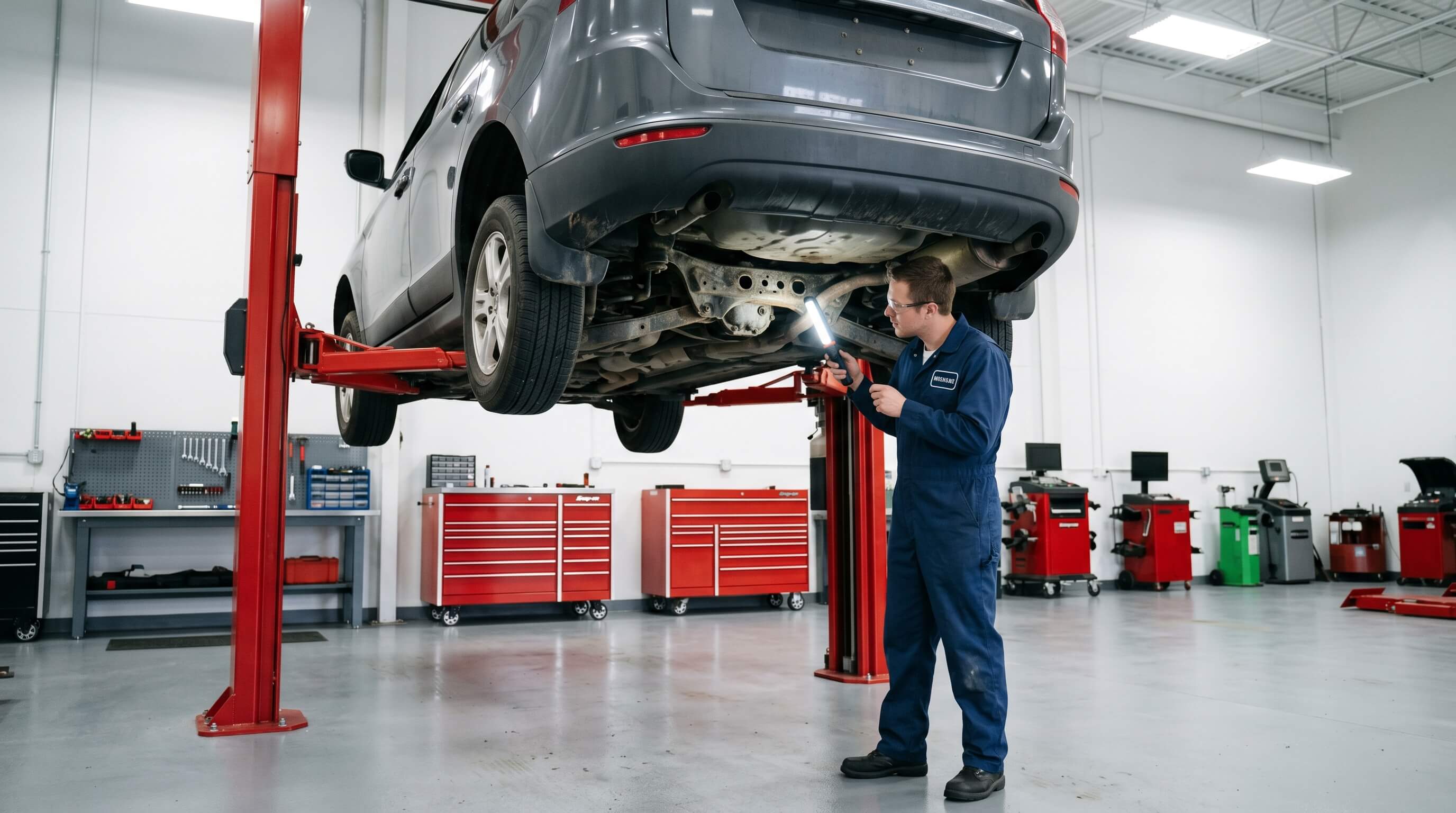
- Pull the vehicle onto a lift if available. Look at the rear cross-member, exhaust hangers, brake-line junctions at the rear axle, and shock absorber mounts for orange-colored corrosion (different from normal surface rust).
- Open the hood. Check the A/C condenser front face for corrosion-related fin damage. Salt-air-driven debris over 5+ years degrades the condenser.
- Tap the rocker panels under the doors. Hollow-feeling rockers in older salt-coast vehicles signal early-stage corrosion.
A/C system pressure test
- Run it with the engine cold. The vent temperature should drop below 50°F within 90 seconds at idle.
- Check it holds cool-air output at idle for 5+ minutes without short-cycling. Short-cycling indicates a low refrigerant charge or a failing compressor.
Flood-history paper check
- Pull the Carfax or AutoCheck report. Look for any title brand including “flood,” “water damage,” or “salvage from natural disaster.”
- Check title-state history for any state titled in the 60 days following a major hurricane — Michael 2018 (panhandle), Ian 2022 (southwest FL), Idalia 2023 (Big Bend / Tallahassee).
- Run the Florida DHSMV Motor Vehicle Information Check for current Florida title status.
Flood-physical inspection
- Pull the rear seat. Check the floor pan under the carpet for water lines, mineral deposits, or rust on the seat-bolt threads.
- Lift the carpet at the rear cargo well. Same check.
- Smell the cabin with the vehicle closed up for 30 minutes. Mildew is the giveaway most paper checks miss.
- Inspect electrical connectors under the dashboard and beneath the passenger-side carpet for residual corrosion on connector pins.
Tire and TPMS check
- TPMS sensors fail at higher rates in beach-access vehicles. Check the dashboard light is OFF and all four pressures read on the dash.
- Tread depth should match reported mileage. A 30,000-mile RAV4 with 4/32″ of tread is wrong (should be closer to 6–7/32″).
Independent pre-purchase inspection
- For any used vehicle over $15,000, a brand-qualified or general-mobile mechanic PPI is worth the $150–$250. PPIs are paid by the buyer, not the dealer. Non-negotiable for premium German vehicles where service-history gaps materially affect ownership cost.
Florida Used SUV Quick Checklist
- Undercarriage corrosion — rear cross-member, exhaust hangers, brake lines
- A/C condenser — fin damage from salt-air debris
- Rocker panels — hollow tap sound
- A/C vent temp — below 50°F within 90 seconds, no short-cycling
- Vehicle history report — flood, salvage, or water-damage brands
- Title-state timing — any title within 60 days of a hurricane
- Rear seat floor pan — water lines, mineral deposits, rusty bolts
- Cabin smell test — windows up, 30 minutes, mildew?
- Under-dash connectors — corrosion on pins
- TPMS — all four sensors reading, dashboard light off
- Tread depth vs. mileage — do they match?
- Pre-purchase inspection — $150–$250, always worth it on $15K+ vehicles
Frequently Asked Questions
For a family on the Emerald Coast at this price point, the 2019–2022 Toyota RAV4 and 2019–2022 Honda CR-V are the highest-reliability picks per Consumer Reports and J.D. Power dependability data. Both have salt-air-tested resale curves and Florida-friendly A/C systems.
The 2020–2022 Toyota Highlander is the next pick if three rows are required and the budget can stretch. The Subaru Forester is a strong pick if active outdoor weekends matter — the AWD pays off on wet sand and gravel boat ramps.
Mixed answer. Northern-state vehicles are sometimes cleaner (no salt-air exposure). Sometimes worse — road-salt undercarriage exposure in Michigan, Ohio, Pennsylvania, and the Northeast is harder on undercarriages than coastal salt-air.
The right check is a physical undercarriage inspection. Not a state-of-origin assumption. Vehicles from snow-belt states should have their undercarriages inspected on a lift before purchase. Vehicles from southwest Florida after 2022 (Hurricane Ian) need careful flood-history paperwork.
The 2020–2024 Toyota Highlander is the strongest pick. 84.3 cu ft of cargo with the second and third rows folded. Well-respected reliability. IIHS Top Safety Pick (with specific headlights) on multiple model years.
The Honda Pilot (2019–2024) is the next pick — similar cargo numbers and generally solid IIHS scores. The Subaru Ascent (2019–2024) is the budget-conscious three-row choice with standard AWD.
For families who haul a boat in addition to a family of 5, the body-on-frame Toyota 4Runner Limited with the third-row option is the most capable choice. Cargo space is materially smaller than the unibody three-rows.
No. But verify two things. First, the title-state history covers the past five years. A vehicle Florida-titled for the past five with no out-of-state movement is the cleanest case.
Second, physical inspection covers salt-air and flood concerns specifically. Florida is one of the largest used-vehicle markets in the country. The majority of Florida-titled vehicles are genuinely clean. The ones to inspect carefully are the ones with title-state movement immediately after a major hurricane in another southeastern coastal state.
For paved Emerald Coast driving — no. The difference is small enough that no buyer should choose between the two on AWD alone.
For wet-sand boat ramps, gravel river-access roads, and similar light off-pavement surfaces, the Subaru Symmetrical All-Wheel Drive does have a meaningful advantage. It’s a full-time mechanical AWD system rather than the rear-electric or part-time rear-mechanical systems most competitors use.
For real off-road — dunes, deeper sand, true low-range needs — neither the Forester nor the RAV4 is the right vehicle. That’s a 4Runner, Wrangler, or Bronco Sport Badlands answer.
Ready to Find Your SUV?
Every SUV on our lot comes with full disclosure. No hidden history. No pressure.
Related Destin Autos Guides
- How to Read a Vehicle History Report — companion guide for verifying any vehicle in this list
- Complete Guide to Buying a Used Car in Florida
- Used Car Financing Guide Florida
- Military Auto Financing Guide — PCS-aware buying for Eglin, Hurlburt, and Tyndall

Important Disclaimer: This guide is for general educational purposes only and does not constitute financial, legal, or professional advice. Vehicle availability, pricing, and features subject to change without notice. IIHS and NHTSA ratings cited reflect records published as of April 2026 and can change as testing protocols update; verify the current rating for the specific model year and trim before committing. How this article was made: Outlined and reviewed by the Destin Autos sales team. First draft assisted by AI tools, then verified against IIHS official records, EPA fueleconomy.gov data, NHTSA, Consumer Reports and J.D. Power public methodology, manufacturer warranty pages, and Florida DHSMV publications. Anywhere a claim could not be verified from a primary source, it was removed.