12 min read

Two questions decide most used-car buys. Has it been in a serious accident? Is the title clean? Everything else fills out the picture. Those two are the deal-breakers. And you can answer both for free, before you ever step on a lot.
This guide shows you how. What’s in a vehicle history report. The six red flags that should slow a sale down. Where to get the free reports. And the Florida-specific things — flood, salt, hurricane history — to look for at any used-car lot in the panhandle.
In This Guide
What’s in a Vehicle History Report
Five categories every VHR covers — and where the gaps are
A vehicle history report (VHR) pulls everything reported about a specific VIN. State DMVs. Insurance carriers. Auction houses. Repair shops. Fleet operators. The National Insurance Crime Bureau. It compiles all of that into five categories.
Title and registration history. Where the car has been titled. What type of title — clean, salvage, rebuilt, lemon-law buyback, flood, junk. How many states. Whether the current title matches what the seller is telling you.
A clean Florida title that turns out to be a Texas salvage title from three years ago is the most common gotcha.
Accident and damage records. Reported collisions and insurance claims. Note the word reported. Minor fender-benders settled cash between drivers don’t show up. The VHR shows what got insurance involved or made a police report.
Ownership chain. How many owners. How long each one held the car. Whether owners were private parties, fleet operators, or rental companies.
A vehicle that spent year one as a Hertz rental and year two with a private owner reads very differently from a five-owner-in-five-years pattern.
Service and maintenance records. Oil changes, scheduled service, repairs, inspections — but only what got reported. Coverage is uneven. A car serviced at independent shops will look thin on paper. One serviced at franchise dealerships will have nearly every visit logged.
Odometer history. Every recorded mileage reading from title transfers, service visits, inspections, registrations.
Biggest red flag in the entire report: An odometer reading that goes backward — even by 100 miles. The numbers should climb steadily over time. A backward step deserves immediate investigation.
Six Red Flags That Should Slow a Sale Down
Most VHRs have an oddity or two — these six are not nothing
Most Florida used vehicles have one or two oddities in their VHR. Usually nothing. These six are not nothing. Any one is reason to pause and confirm before you commit.
1. Salvage or rebuilt title at any point. A salvage title means an insurance company declared the vehicle a total loss. Repair costs exceeded a threshold of the vehicle’s value (80% in Florida under Fla. Stat. § 319.30). A rebuilt title means a salvage vehicle was repaired and re-titled.
Some rebuilds are good. Many aren’t. Insurance gets harder. Resale takes a hit. If a VHR shows any salvage history, you need photos and inspection records of the rebuild — plus an independent pre-purchase inspection. Non-negotiable.
2. Flood-damage indicators. Florida sees this more than any state.
Look for title-status entries listing “flood” or “water damage.” Watch for registration timing — a vehicle titled in a hurricane-affected county the month after a major storm. And auction records flagged “flood damage.”
Florida-specific: Florida law requires flood vehicles to be branded — but only when the damage gets reported. Move a flooded car across state lines fast enough, and the brand can fall off. That’s why the physical inspection matters just as much as the paper trail.
3. Odometer rollback or inconsistency. Any backward reading deserves an explanation. Same with unusually long gaps with no reading at all. Federal odometer fraud is a felony under the Motor Vehicle Information and Cost Savings Act. It still happens — especially on vehicles sold through multiple wholesale channels.
4. Open safety recalls. Recalls don’t disqualify a vehicle. Unaddressed open recalls do. Some are minor (a weatherstrip clip). Some aren’t (Takata airbags, GM ignition switches). The NHTSA recall lookup is free. Run it on every used vehicle.
5. Sudden ownership transfer pattern. Three owners in 12 months almost always has a story. Usually the story is fine — financial hardship, a vehicle that didn’t fit a growing family, a snowbird who bought wrong. Sometimes the story is mechanical. Worth asking.
6. Major service shop reports of significant repair. A VHR showing a transmission replacement at 65k, an engine repair at 80k, and a major collision repair at 95k is telling you something. That vehicle has had a hard life. None of those alone is disqualifying. All three together is.
Free Reports vs Paid: What Each One Shows
Run the free reports first — they cover the highest-stakes information
| Source | Cost | What It Shows | Best For |
|---|---|---|---|
| NHTSA Recall Lookup | Free | Open safety recalls by VIN | Every vehicle, every time |
| NICB VINCheck | Free (5/day) | Theft, unrecovered theft, total-loss salvage history | Confirming vehicle isn’t stolen and has no insurance-declared total loss |
| NMVTIS Providers | $2–$15 | Title brands, odometer readings, total-loss declarations from federal NMVTIS database | Most accurate title-brand data; cheapest paid option |
| CARFAX | Single & multi-report packages, 60-day window | Full title + accident + service history + ownership chain | Most service-record coverage; widely cited; many dealers pre-share |
| AutoCheck | $24.99 single / $49.99 for 25 (21-day window) | Full history + AutoCheck Score (proprietary 1–100) | Auction-data heavy; popular with dealers; cheaper than CARFAX |
The honest read. If the seller shares a Carfax or AutoCheck up front, you’ve got the deepest report at no cost. If the seller hides the report, that’s its own data point.
Run NHTSA + NICB on every vehicle either way. Add a $3 NMVTIS report if no full report is shared.

How to Read Each Section Like a Pro
Walk through a VHR section by section — here’s what to look for
Page 1 — the dashboard. Title status. Accident count. Owner count. Service-record count. Odometer-rollback flag. Total-loss declaration. If anything on page 1 is red or flagged — stop. Read those sections in detail before going further.
Title brand history. Reads chronologically by state. Look at the most restrictive brand ever applied, not just the current one.
Watch for title washing: A vehicle currently titled “clean” in Florida that carried a “salvage” brand in Louisiana five years ago is still a salvage-history vehicle. The brand stays in the report — even if a later state didn’t carry it forward.
Accident records. Each entry shows date, location, severity (minor / moderate / severe), and what was damaged. A single moderate front-end accident on a 10-year-old vehicle? Normal. A severe roll-over on a 4-year-old vehicle? Different conversation.
Service record entries. Date, mileage, service type, reporting shop. What healthy looks like: regular oil-change intervals (every 5,000–10,000 miles depending on the vehicle), scheduled-maintenance items at the right windows (timing belt at 90–100k if applicable, transmission service at 60–100k), continuity of shops over time.
Ownership chain. Each owner shows time held, location, registration type (personal / fleet / rental). Three-plus owners isn’t automatically bad. Military families PCS often. But the pattern matters. Owner 1 → Owner 2 → Owner 3 in 18 months is telling you something.
Odometer history. Plot the readings. They should rise smoothly. Any backward step is a felony-grade red flag. Long gaps (more than 18 months without a reading) deserve a question. Sometimes the vehicle was just parked. Sometimes it was titled in a state with weak reporting and the data isn’t there.
What to Inspect on Every Florida Vehicle
Gulf Coast climate is hard on used cars — run these four checks at any lot
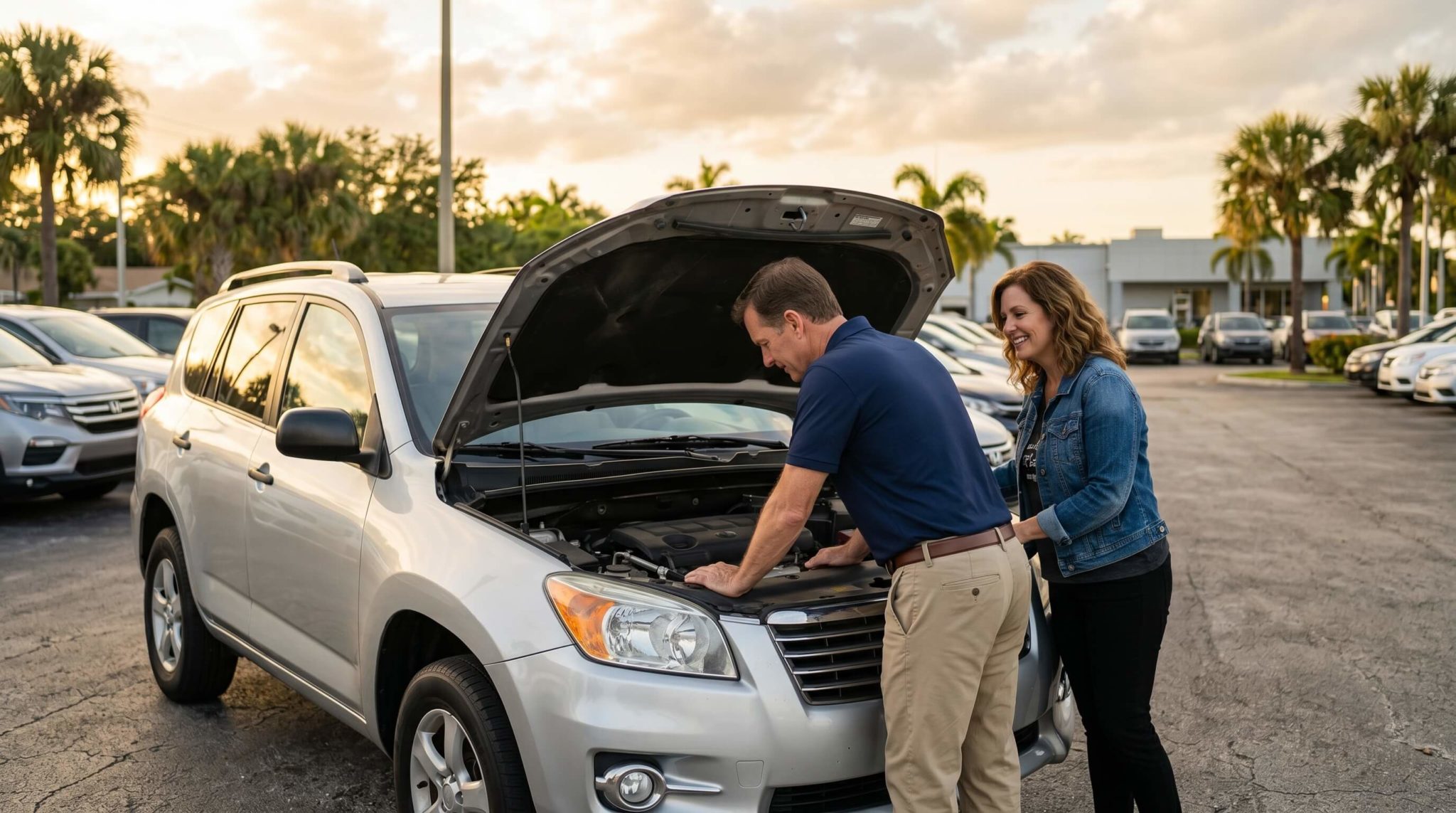
Climate is hard on used cars on the Gulf Coast. The four checks below should be run on any vehicle for sale in this market — at our lot or anywhere else.
Salt-air corrosion
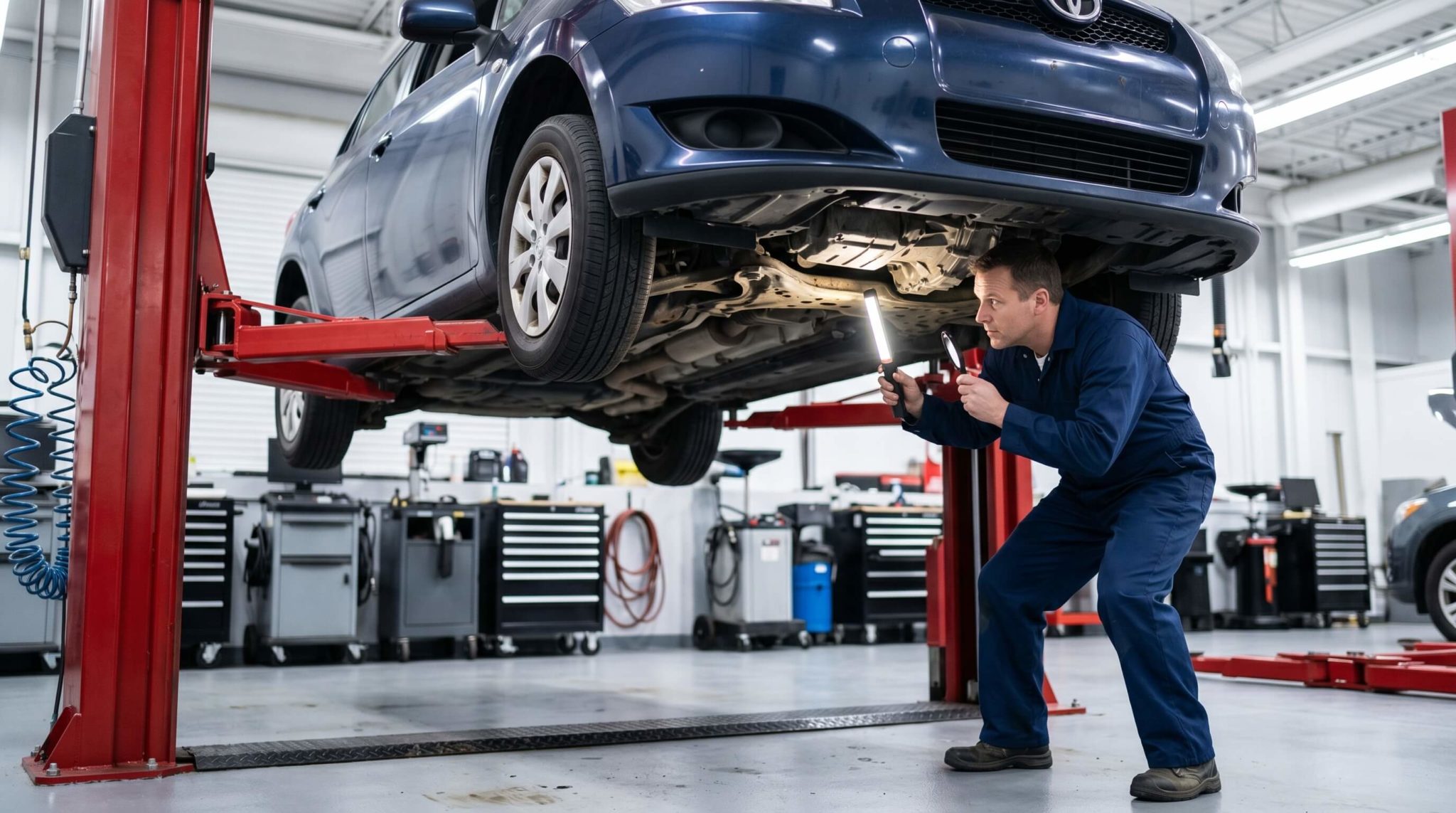
Pull the vehicle onto a lift if available. Look at the rear cross-member, exhaust hangers, brake-line junctions at the rear axle, and shock absorber mounts for orange-colored corrosion (different from normal surface rust on a steel undercarriage).
Open the hood. Check the A/C condenser front face for corrosion-related fin damage. Salt-air-driven debris over 5+ years degrades the condenser.
Tap the rocker panels under the doors. Hollow-feeling rocker panels in older salt-coast vehicles signal early-stage corrosion.
Hurricane and flood indicators
Pull the rear seat and check the floor pan under the carpet for water lines, mineral deposits, or rust on the seat-bolt threads. Lift the cargo-well carpet. Same check.
Smell the cabin with the vehicle closed up for 30 minutes. Mildew is the giveaway most paper checks miss.
Inspect electrical connectors under the dashboard and beneath the passenger-side carpet. Florida flood vehicles often dry visually but leave residual corrosion on connector pins.
A/C system pressure test
Florida summers are non-negotiable on A/C. Run the system with the engine cold. The vent temperature should drop below 50°F within 90 seconds at idle. Hold cool-air output for 5+ minutes without the compressor short-cycling.
Battery load test
Heat shortens battery life materially in Florida. Most batteries don’t make it past 4 years here. A battery showing diminished cold-cranking amps should be replaced before, not after, purchase.
Florida Vehicle Inspection Quick Checklist
- Undercarriage cross-member and exhaust hangers — orange corrosion?
- A/C condenser front face — fin damage from salt-air debris?
- Rocker panels — hollow tap sound?
- Rear seat floor pan — water lines, mineral deposits, rusty bolt threads?
- Cabin smell test (windows up, 30 minutes) — mildew?
- Under-dash electrical connectors — corrosion on pins?
- A/C vent temperature — below 50°F within 90 seconds?
- Battery load test — cold-cranking amps in spec?
How to Run a Free VIN Check on NHTSA.gov
Five steps. No account required. Under three minutes.
- Go to nhtsa.gov/recalls. Find the “Search by VIN” box.
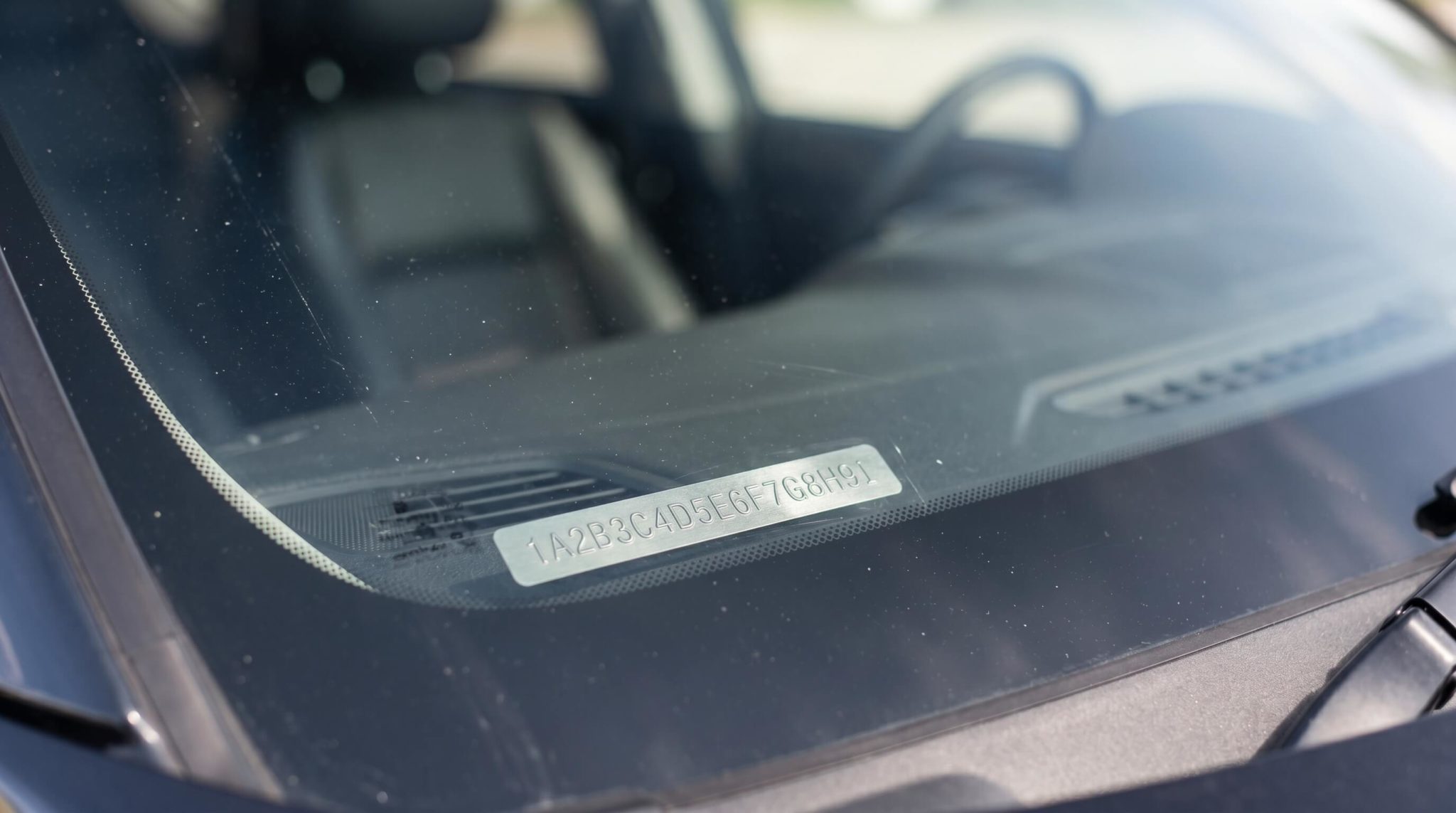
- Enter the 17-character VIN. The seller should provide it. Every VHR, dealer listing, and private-sale ad should include it. If a seller won’t share the VIN, walk away.
- Click “Search.” The page returns every safety recall ever issued for that vehicle, plus the status of each one (open / completed / not applicable).
- Read open recalls in detail. Click each one for the manufacturer’s bulletin. Some are minor. Some require immediate stop-driving remediation.
- Save or screenshot the page with the date visible. If the seller hasn’t already addressed open recalls, this is your written record. Franchise dealers will perform recall remediation for free regardless of who sold the vehicle. Federal law requires manufacturers to provide free recall repairs for vehicles within 15 years of first sale. Older vehicles may still be repaired voluntarily, but it isn’t legally required.
Florida buyers: Also check the Florida DHSMV Motor Vehicle Information Check at services.flhsmv.gov/MVCheckWeb. It’s the state’s free title-status lookup. Confirms the title brand currently in Florida — useful when the VHR shows out-of-state branding history that may or may not have been carried forward.
For full-history coverage at the lowest cost, run an NMVTIS-approved provider report from vehiclehistory.gov. The federal NMVTIS database aggregates title and total-loss data from participating states. Federal law requires all insurance carriers, junk yards, and salvage yards to report to it. Reports cost $2–$15 depending on the provider.
For most buyers, free NHTSA + free NICB + a $3 NMVTIS report is enough information to make a confident decision before considering whether to also buy a Carfax.
Frequently Asked Questions
Free NHTSA + NICB + a $3 NMVTIS report covers the highest-stakes information: open recalls, theft status, total-loss declarations, title-brand history. Carfax adds depth on service records and accident details. It doesn’t change the safety + title-brand picture.
If a dealer is sharing the Carfax with you, you’ve got the deepest report at no cost. If you’re shopping privately and the seller won’t share one, the free combination plus an in-person inspection is generally enough for a confident decision.
Both pull from similar data sources. They emphasize different categories.
Carfax has deeper service-record coverage. Most franchise dealerships subscribe to it.
AutoCheck has stronger auction-data coverage — it’s owned by Experian, which has direct auction-house feeds. It also assigns a proprietary 1–100 AutoCheck Score useful for quick comparisons. Some independent dealers prefer it because it’s cheaper.
Most buyers don’t need both. If you have access to one, that’s usually enough.
Three checks, in order.
First: VHR title-brand history. Flood-branded vehicles should be flagged.
Second: registration timing. A vehicle titled in a hurricane-affected county within 60 days after a major storm gets a closer look. Hurricane Michael 2018, Hurricane Ian 2022, Hurricane Idalia 2023.
Third: physical inspection. Pull the rear seat. Look under the carpet for water lines. Check ECU connectors and under-dash wiring for corrosion. Smell the interior with the windows up after the vehicle has sat closed for 30 minutes.
Hurricane-flood vehicles often pass paper checks and fail the physical.
A salvage title means an insurance company declared the vehicle a total loss. Repair costs exceeded a threshold of the vehicle’s pre-loss value.
Florida’s threshold under Fla. Stat. § 319.30 is 80% for general salvage classification. For late-model vehicles seven model years or newer with retail value of at least $7,500, a 90% threshold triggers a certificate of destruction (vehicle cannot be rebuilt) instead of a rebuildable salvage title.
A rebuilt title means the salvage vehicle has been repaired and inspected by the state.
Salvage vehicles aren’t categorically bad. But they need documentation of what was damaged and what was repaired, photos before/during/after the rebuild, an independent pre-purchase inspection, and an honest conversation about resale value. Rebuilt-title vehicles typically resell at a meaningful discount to clean-title value per Kelley Blue Book industry guidance.
For most buyers, the discount isn’t worth the resale and insurability hit. For the right buyer with the right vehicle and a thorough rebuild, it can work.
Free reports return instantly. NHTSA recall lookup, NICB VINCheck, Florida DHSMV title-status — all under 30 seconds once you enter the VIN. Paid Carfax or AutoCheck reports are also instant once payment is processed.
The longest part is usually finding the 17-character VIN itself. It appears on the dashboard at the base of the windshield, on the driver-side door jamb, on the registration card, and on the insurance card. Most dealer listings include the VIN in the listing detail page.
No. The relevant questions are: how severe, what was damaged, how was it repaired.
A single moderate front-end accident on a 10-year-old vehicle that’s had clean records since is not the same risk as a severe undercarriage hit on a 3-year-old vehicle. Severity is reported on the Carfax.
For severe accidents — especially those involving frame damage, airbag deployment, or roll-over — an independent pre-purchase inspection by a body shop, not just a mechanical inspection, is worth the cost. Frame damage is the single hardest issue to spot from photos.
Ready to Shop?
Every vehicle on our lot comes with full disclosure. No hidden history. No surprises.
Free Tools Referenced in This Guide
- NHTSA Recall Lookup — free recall check by VIN
- NICB VINCheck — free theft and total-loss check
- VehicleHistory.gov (NMVTIS) — approved providers, $2–$15
- Florida DHSMV Motor Vehicle Check — free FL title-status lookup
Related Destin Autos Guides
- Complete Guide to Buying a Used Car in Florida
- Used Car Financing Guide Florida
- Military Auto Financing Guide (PCS-aware buying for Eglin, Hurlburt, Tyndall)


Important Disclaimer: This guide is for general educational purposes only and does not constitute financial, legal, or professional advice. Vehicle history reports are dependent on reported data and may not reflect unreported incidents. Florida statutes referenced are current as of April 2026; always verify with the relevant agencies. How this article was made: Outlined and reviewed by the Destin Autos sales team. First draft assisted by AI tools, then verified against primary Florida statutes, federal NHTSA/NMVTIS guidance, and Florida DHSMV publications. Anywhere a claim could not be verified from a primary source, it was removed. Sources: NHTSA, NICB, NMVTIS, FLHSMV, Fla. Stat. § 319.30.